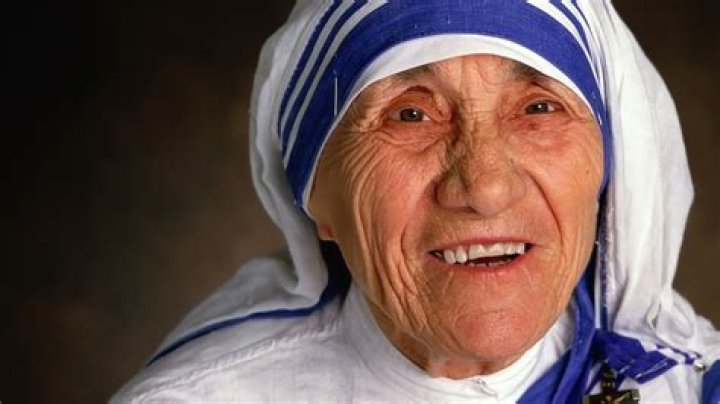
Mother Teresa’s net worth remains unknown
Mother Teresa Wiki Biography
Anjezë Gonxhe Bojaxhiu, known universally as Blessed Teresa of Calcutta, was born on 26 August 1910 in Skopje, then in the Ottoman Empire, now FYR Macedonia. She passed away on 5 September 1997, in Calcutta/Kolkata, West Bengal India.
Mother Teresa never accrued any private funds, and there are no concrete figures to indicate such. However, she did attract millions of dollars in donations from numerous benefactors from around the world to support her work, not only in India but eventually spreading to many other countries too. Questions have been posed due to lax accounting practices in Teresa’s organisation, including failure to advise their financial position in India, as required by laws governing charitable organizations. The answer seems to be that all funds were spent on administering to an ever-expanding number of people in dire need of assistance, worldwide.
Mother Teresa’s Early Life and Mission
Agnes’ father Nikolie was involved in local politics but died when she was nine years old. She was fascinated by tales of missionary work from a young age and became convinced by her late teens that she should contribute in some way, allegedly confirmed to her during a visit to the shrine of the Black Madonna in the Kosovan town of Vitina-Letnice when she was 18. She left home immediately and joined a Loreto Abbey at Rathfarnham in Ireland to learn English, as well as the basics of teaching and missionary work.
After moving to India and learning Bengali, she taught at St Theresa’s school in Darjeeling and adopted the name Teresa in 1931 when beginning her religious vows. She subsequently moved to teach at the Loreto school in eastern Calcutta, took her final vows in 1937, and became headmistress in 1944. Throughout this time, she observed the poverty around her, and also the Hindu/Muslim violence after the end of the Second World War.
Despite seeing the value of her teaching, Sister Teresa became more concerned with the general condition of millions of people around her, and determined to alleviate their suffering. In 1948, she started a school in Calcutta, which very soon became a haven for ‘the poorest among the poor’. Attracted by a small group of female activists and support from the Vatican and the Indian government, she converted a derelict Hindu temple into a place for the dying and established several clinics around Calcutta to care for sufferers of leprosy. In 1955, she began caring for orphans and homeless children.
Mother Teresa’s Global Impact
From the early 1960s, Mother Teresa opened hospices in other parts of India, as well as in other countries such as Venezuela, Rome, Austria, and Tanzania. The Missionaries of Charity, which she established in 1950, spread globally and by the early 2000s, had grown to over 450 brothers and 5,000 sisters worldwide, operating 600 facilities in 120 countries. Concurrently, other organizations devoted to these charitable works were founded.
Mother Teresa’s work was formally recognized and rewarded by various awards and honors, including the Nobel Peace Prize in 1979 and honorary citizenship of the United States of America in 1996. She was beatified as “Blessed Teresa of Calcutta” by the Catholic Church in 2003.
Despite some criticism of her institutions regarding unsanitary conditions and her anti-abortion stance, her influence spread, and at the time of her passing, she had established 610 missions in 123 countries, incorporating 4,000 sisters, and an associated brotherhood of 300 members.
Upon her passing in September 1997, the Indian government granted her a state funeral, and she was widely praised and admired for her lifelong devotion to the care of the poor, the sick, and the disadvantaged. Mother Teresa remains one of the outstanding figures of the 20th century.
