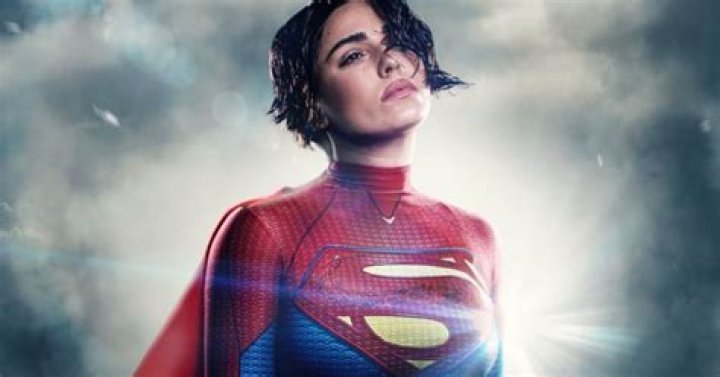
Actress who Played Supergirl in The Flash
In the DC Extended Universe (DCEU) film “The Flash,” Supergirl was portrayed by actress Sasha Calle. This iteration of the character, Kara Zor-El, a.k.a. Supergirl, was a unique blend of Superman lore from the DCEU and elements from alternate-universe DC comic books.
“The Flash” movie delved into a storyline that revisited events from “Man of Steel” in a different universe, offering a fresh twist on a familiar tale.
The film’s protagonist was Barry Allen, also known as The Flash, played by Ezra Miller. This film marked The Flash’s first standalone entry in DC’s movie history, allowing fans to explore the character’s narrative and growth further.
The core plot of “The Flash” centered on the aftermath of Barry Allen’s decision to change the past by time-traveling to prevent his mother’s death. This action inadvertently disrupted the timeline, leading to unexpected consequences and setting the stage for a multiverse-wide adventure filled with thrills and action.
With Sasha Calle’s portrayal of Supergirl in the mix, “The Flash” introduced a new and exciting dynamic to the DCEU. Supergirl, Superman’s cousin, brought her distinct powers and perspective to the story. The inclusion of both The Flash and Supergirl in one film opened the door to engaging interactions and superhero team-ups that fans had eagerly anticipated.
“The Flash” promised to be a groundbreaking addition to the DCEU, exploring themes of time travel, alternate universes, and the consequences of one’s actions. With Ezra Miller reprising his role as The Flash, fans anticipated a compelling performance as he navigated the repercussions of altering time.
The concept of a multiverse, where various realities and character versions coexisted, intrigued comic book enthusiasts. By venturing into the idea of multiple universes, “The Flash” had the potential to incorporate beloved characters and elements from different DC comics, creating a visually stunning and narratively rich cinematic experience.
Overall, “The Flash” promised to be an exhilarating and genre-defining film within the DCEU. With a cast led by Ezra Miller and the addition of Sasha Calle as Supergirl, the movie aimed to take audiences on a thrilling journey through time and space, exploring the complexities of the superhero realm and the repercussions of meddling with reality.
Fans of The Flash and DC comics eagerly anticipated this cinematic adventure, poised to make a lasting impact on the DCEU and the superhero genre.
Sasha Calle’s Transformation into Supergirl in ‘The Flash’
In “The Flash,” Supergirl’s storyline was a captivating fusion of two well-known DC comic books: “Superman: Red Son” and “Flashpoint.” These comics explored alternate Earth histories, showcasing divergent events if the Kents had not discovered Kal-El, Superman.
Unlike the “Man of Steel” narrative where Kal-El had the Codex in his DNA, this version fused Krypton’s genetic database with Kara Zor-El’s DNA, positioning her as a pivotal figure in the story.
In “The Flash,” General Zod, a Kryptonian with powers akin to Superman’s, came to Earth in search of Supergirl instead of Superman, a result of Barry Allen’s time-altering actions. In this altered reality, Kal-El was sent to Earth alone in “Man of Steel,” while Kara Zor-El remained on Krypton.
Aided by Michael Keaton’s Batman, the two Barry Allens located and rescued Supergirl under the misconception that she was Superman. Despite saving Kara, whom he initially wasn’t seeking, Barry’s actions restored her hope, inspiring her to fight for Earth. From then on, her journey paralleled Superman’s path in “Man of Steel.”
An intriguing detail in “The Flash” was General Zod’s speech, reminiscent of his dialogue in “Man of Steel” where he demanded the Kryptonian residing on Earth to surrender. This linkage underscored the intertwining of alternate realities in the film.
Supergirl proved to be a valuable ally, teaming up with the Flashes and Batman to confront General Zod and other Kryptonians. However, challenges emerged as both Supergirl and Batman faced perilous situations, repeatedly perishing in battle against the Kryptonian adversaries. In response, the younger Barry endeavored to alter the outcome by traveling back in time incessantly to prevent their deaths.
This intricately woven narrative depicted the repercussions of time travel and multiverse exploration on the characters and their narratives. “The Flash” delved into the effects of changing established timelines and introduced compelling renditions of iconic characters like Supergirl, resulting in an action-packed and emotionally impactful adventure.
The Flash Plot Overview
In the storyline of “The Flash,” the movie commenced with Barry Allen assisting Bruce Wayne and Diana Prince (Batman and Wonder Woman) in foiling a robbery by a terrorist group in Gotham City. Afterward, Barry revisited his childhood home and reflected on his parents, Nora and Henry.
Tragically, Henry was wrongly incarcerated for the murder of Barry’s mother, Nora. Driven by emotion, Barry inadvertently accessed the Speed Force, an energy source granting him super speed, allowing him to travel back in time to the day Nora died. Despite Bruce’s warnings on the dangers of time travel, Barry shared this development with him and proceeded to alter the past.
Upon his return to the present, Barry was ejected from the Speed Force by another speedster and found himself in an alternate 2013 where his mother was alive, encountering his younger self and realizing his arrival on the day he gained superpowers originally.
To rectify the timeline, both Barrys visited the Central City Police Department. The elder Barry compelled his 2013 self to undergo another lightning strike, recreating the event that granted him his powers but resulting in the elder Barry losing his abilities.
While endeavoring to gather the Justice League to confront General Zod’s impending invasion, the Barrys faced numerous hurdles. In this revised timeline, they struggled to locate Diana (Wonder Woman), Victor Stone’s (Cyborg) empowerment had not occurred, and Arthur Curry (Aquaman) was never born.
Leveraging Bruce’s guidance, the Barrys embarked on a mission to find Kal-El (Superman) by using a link in the Batcomputer, leading them to a Kryptonian pod in Siberia, where they rescued Kara Zor-El, a.k.a. Supergirl, instead of Superman. With Kara’s assistance, they endeavored to restore Barry’s powers, ultimately succeeding after a hazardous procedure involving lightning strikes.
Preparing to combat Zod’s forces, they discovered that Kara possessed the Codex essential for Kryptonian repopulation. During the battle against Zod, Kara met a tragic fate, and Bruce sacrificed himself to neutralize a Kryptonian vessel.
In a last-ditch effort to save their comrades, the Barrys engaged in an incessant cycle of time travel, albeit in vain, leading to the collapse of the multiverse.
Encountering a corrupted
In a future iteration of 2013-Barry, there remained a steadfast belief in the potential to alter the timeline, thereby preventing the catastrophe instigated by Zod and averting the demise of their comrades. However, as the narrative unfolded, a divergence emerged when Barry express his intent to allow Nora’s demise, triggering a pivotal clash. Ultimately, 2013-Barry chose to sacrifice himself to safeguard his current self and eradicate his future manifestation from the continuum.
Following these events, Barry rectified the timeline alterations, while also finding closure regarding his mother’s tragic fate. Nonetheless, a slight adjustment in the past was made, providing new irrefutable evidence that exonerated Henry in the present. Subsequently, after aiding in his father’s vindication, Bruce, whose appearance had once again shifted due to the repercussions of Barry’s actions, reached out to Barry.
The intricate and emotionally poignant narrative of “The Flash” delved into the ramifications of time travel, the intricate interplay between disparate universes, and the sacrifices demanded of superheroes in upholding the world they cherish. Barry’s odyssey in the movie encapsulated themes of self-realization, acceptance, and assuming the mantle of responsibility commensurate with his extraordinary capabilities.
—
“The Flash” of 2023 stands as an American superhero film centered on the iconic DC Comics character of the same name. It was a collaborative effort between Warner Bros. Pictures, DC Studios, Double Dream, and the Disco Factory and marked the 13th entry in the DC Extended Universe (DCEU).
Under the direction of Andy Muschietti and the pen of Christina Hodson, the film starred Ezra Miller in the titular role of Barry Allen, or The Flash. The ensemble cast featured Sasha Calle, Michael Shannon, Ron Livingston, Maribel Verdú, Kiersey Clemons, Antje Traue, and Michael Keaton.
The storyline revolved around Barry Allen’s quest to rewrite the past and avert his mother’s tragedy, inadvertently setting off a chain of unforeseen consequences that propelled the narrative into a riveting and action-packed escapade.
The journey toward a standalone Flash project commenced in the late 1980s, with various writers and directors attached to the endeavor throughout the years. Ultimately, the project was reimagined as part of the DCEU, with Ezra Miller cast in the titular role.
Despite encountering numerous hurdles, including directorial transitions driven by creative disparities, the project found stability when Andy Muschietti and Christina Hodson assumed creative control in July 2019, heralding a new chapter in the film’s production.
Beginning in January 2020, pre-production unfolded, drawing inspiration from the lauded comic book arc “Flashpoint” (2011) while weaving in beloved DC characters such as Supergirl, embodied by Sasha Calle, and alternate iterations of Batman portrayed by Ben Affleck and Michael Keaton.
Principal photography unfolded from April to October 2021 at Warner Bros. Studios in Leavesden, UK, along with various sites across the nation. The movie premiered at Grauman’s Chinese Theatre in Los Angeles on June 12, 2023, marking the culmination of a tumultuous production journey marked by delays stemming from directorial shifts, the COVID-19 pandemic, post-production challenges, and controversies surrounding Ezra Miller.
Despite receiving a mixed reception from critics who lauded elements like humor, action sequences, and performances but critiqued the final act and visual effects, “The Flash”, the film was eagerly anticipated by audiences.
Regrettably, the movie fell short of its anticipated financial success, emerging as one of the most notable box-office disappointments to date. With production costs ranging from $200 to $220 million (excluding marketing expenses), the film’s global earnings of $267.3 million spurred estimations of a prospective $200 million loss for Warner Bros.
Notwithstanding the financial setback, “The Flash” stands as a pivotal addition to the DCEU, offering a fresh interpretation of the beloved speedster hero and presenting a multiverse-infused narrative interweaving diverse iconic DC characters in a gripping adventure.
—
**Cast of The Flash**
| **Actor** | **Character** | **Description** |
|———————-|——————————-|—————————————————————————————————————————————————————————————————————————–|
| Ezra Miller | Barry Allen / The Flash | A police forensic investigator from Central City and a member of the Justice League. He acquires superhuman speed abilities through the Speed Force, portrayed with multi-dimensional nuances and human fallibility. The film introduces a younger 2013 version of Barry and a corrupted elder iteration dubbed “Dark Flash.” |
| Ian Loh | Young Barry (flashbacks) | Embodies a youthful portrayal of Barry Allen in flashbacks that delve into his formative years. |
| Ed Wade | 2013-Barry (physical) | Serves as Ezra Miller’s acting counterpart and physically embodies the 2013 Barry Allen in sequences featuring both iterations of the character. |
| Sasha Calle | Kara Zor-El / Supergirl | An influential Kryptonian and cousin of Kal-El / Clark Kent / Superman, harnessing akin powers and abilities. Sasha Calle makes history as the first Latina actress to embody Supergirl. |
| Michael Shannon | General Zod | A Kryptonian commander with abilities akin to Superman’s, hailing from an alternate timeline where Kara arrived on Earth instead of Kal-El. Michael Shannon reprises his role with Zack Snyder’s endorsement despite prior disputes with Warner Bros. concerning the DCEU. |
| Ron Livingston | Henry Allen | Barry’s wrongfully convicted father in his mother’s murder case, succeeding Billy Crudup in the role from former DCEU appearances. |
| Maribel Verdú | Nora Allen | Barry’s deceased mother, a pivotal figure in his upbringing. |
| Kiersey Clemons | Iris West | A journalist at Picture News and Barry’s romantic interest. |
| Antje Traue | Faora-UI | General Zod’s second-in-command in an alternate timeline where Kara landed on Earth rather than Kal-El. |
| Michael Keaton | Bruce Wayne / Batman | A wealthy philanthropist from Gotham City and the masked vigilante, Batman, his presence shaped by Barry’s temporal interventions. Michael Keaton reprised the role, having previously depicted Batman in “Batman” (1989) and “Batman Returns” (1992). |
| Ben Affleck | Bruce Wayne /Batman | Makes an uncredited appearance as the initial incarnation of Bruce Wayne / Batman in Barry’s timeline and the Justice League’s helmsman. Ben Affleck returns to the role from past DCEU appearances, as the emotional resonance between his character and Barry stems from the shared grief of their mothers. |
| George Clooney | Bruce Wayne (alternative) | Uncredited portrayal of an alternate iteration of Bruce Wayne, replacing Affleck’s rendition in the conclusion. George Clooney had previously embodied Batman in “Batman & Robin” (1997). |
—
*Disclaimer*: The provided information serves as general reference material solely. While the information on the Site is offered in good faith, no express or implied representations or warranties regarding its accuracy, adequacy, validity, reliability, availability, or totality are made.
